UA Fundamentalism or Die
I'm sitting here playing Marvel Snap's new draft mode, and it's a marvelous game design solution to Snap's unique design priors. Similar to Riot's last vestige of attempts to give Legends of Runeterra relevance, Second Dinner went with a roguelike design that lets players augment cards with abilities at the end of each round, as well as choose additional cards.
The design eschews complete randomness: players start with three "starter cards" themed around a mechanic. We can only presume that subsequent card choice pools are a function of the initial choice, meaning there's far more intent and deliberate design compared with something like Magic: The Gathering. But brilliance hasn't meant survival: as I've written consistently, the game's performance has been pitiful. Leaders like Ilkka Paananen lament the lack of innovation in mobile and the need to push it forward, but there's no bigger poster child for innovation than Marvel Snap - it's the first true, mobile, digital CCG. Its inability to prosper can't be explained by executive cowardice or an inability to "think different"; it's an inability to think in terms of UA Fundamentalism.
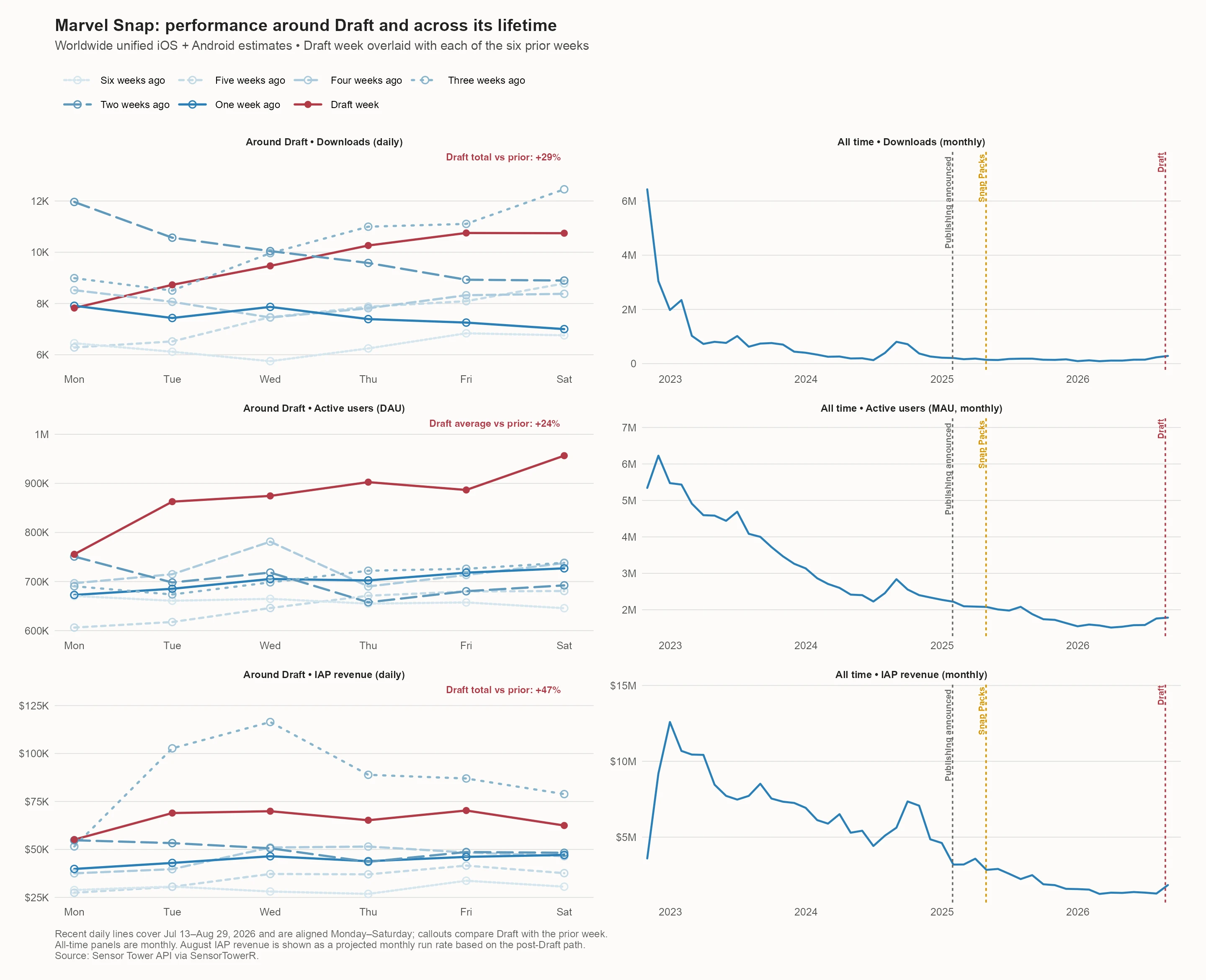
Mobile gaming's shape isn't even a function of physical form or touch input; it's UA. The sooner mobile leaders accept UA Fundamentalism, and how to change it, the sooner the incentives will dictate innovation, rather than feel-good edicts.
Snap's path is particularly instructive. It launched with what I've heard is an eight-figure Samuel L. Jackson ad strategy straight out of the HD brand marketing playbook that, ahem, likely did not pay back its cost. This was combined with a publishing partner, Nuverse, that had little experience and dissolved only a couple of months after Snap's launch. And of course it would take years for Snap to build stronger monetization elements, including card packs and now drafting, that might actually let it bid against 4X titles bidding hundreds of dollars per install. While we could bring out the ATT violin, the customer base differs too, especially in the West. Mobile gamers (lower case "g") are low-information, and so installs are a function of push - Instagram, other in-game ads, Featuring, etc. - rather than "inbound" from news, developer pedigree, or even taste-makers like streamers. As Matthew Ball showed, capturing these low-information gamers (my words, not his) has been single-handedly responsible for practically all industry growth in the last 20 years.
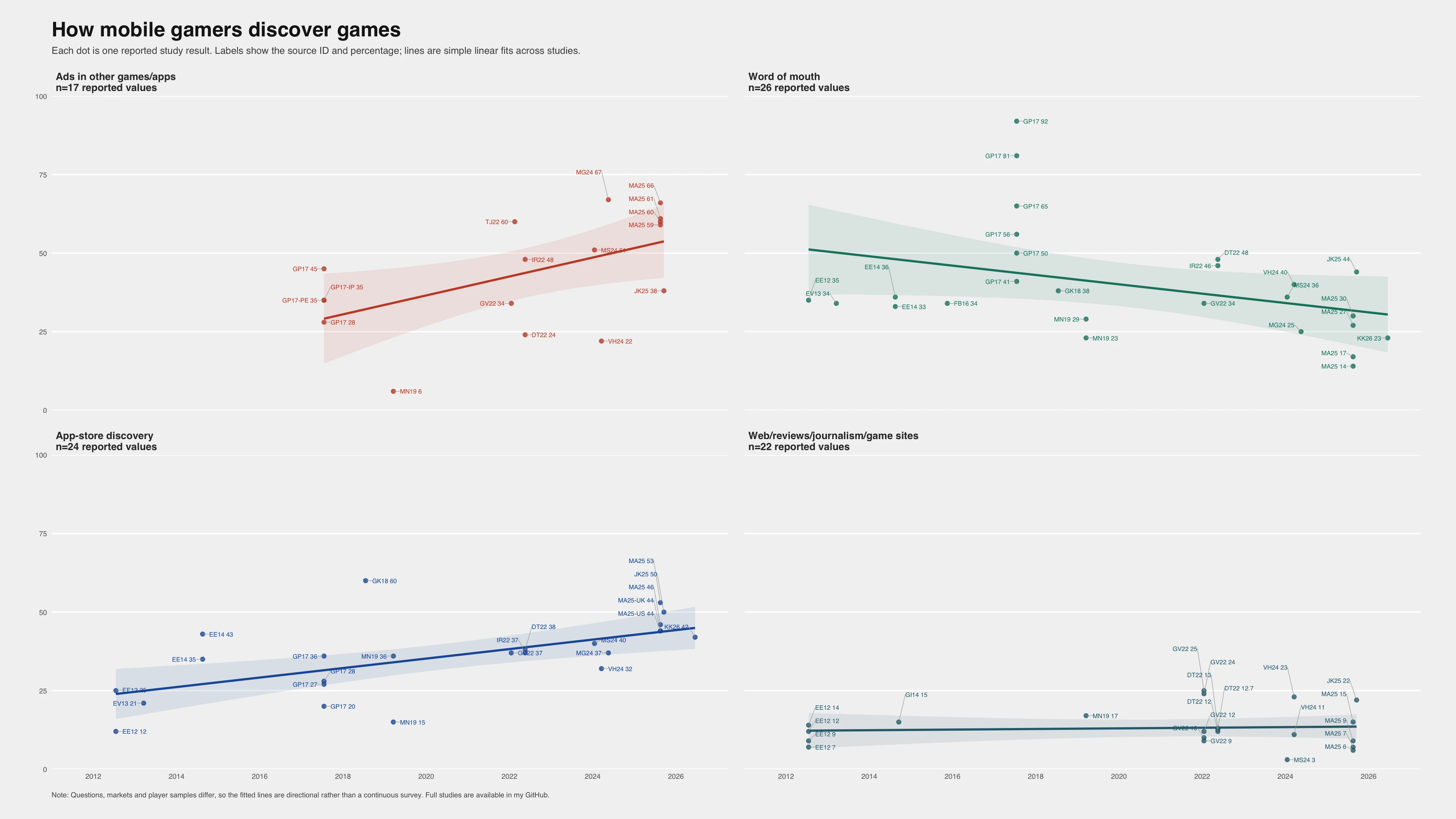
This is also intimately connected with mobile's inability to build mobile-first IP. The entire thing feels like ephemeral slop, with only the 2010 cohort - Angry Birds, Candy Crush, and Clash of Clans - able to muster something akin to "brand recognition," and their inbound traffic showcases it.
Mobile does need innovation, just not the gameplay kind. Indeed, if you care about mobile gameplay innovation, then what matters is UA innovation.