The Internal Game Org That's Outlived Most Firms
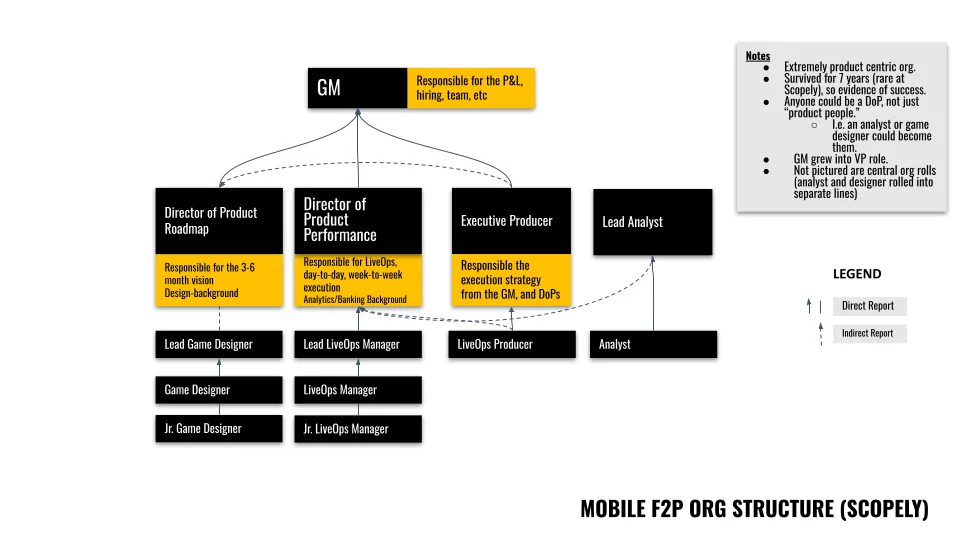
The most effective product orgs I've seen came out of Scopely circa 2020: a two-product director model split between Roadmap and Performance. The evidence of its success has been its survival and its spread. It was copied by people who left, and I've advocated it to multiple studios. Beyond sticking with Monopoly Go for many, many years, and retaining key leadership, I consider this @Javier Ferreira's biggest win.
The insight wasn't just having two directors; it was the predicate that anyone could be one. These roles were not reserved for career PMs or recovering investment bankers. A game designer could own Roadmap PM. An analyst could own Performance PM. And indeed, many did. People were expected to bring their native craft with them rather than sanding it down into generic PM language.
Roadmap Directors owned the three-to-six-month vision of the game. This meant fewer direct reports, fewer fires to manage, more thinking. The Performance Director ran the game day-to-day: live ops, metrics, tuning, with a larger staff. The structure let one person focus relentlessly on where the product was going, while the other focused just as relentlessly on how it was behaving right now.
Under a GM, the two roles reinforced each other instead of competing. Strategy didn't get drowned in Slack emergencies, and live performance didn't get subordinated to abstract future promises. Together, they were meaningfully stronger than a single overextended head of product.
It also created real career pathways. People could start in live operations and grow into broader product leadership. Designers didn't have to abandon design to gain influence, but they could step into product roles if they wanted to. That permeability matters more than most org charts admit.
While I'm sure things have changed since I was first exposed to the model, and the image here doesn't reflect the structure exactly, and certainly not for all in development products, the broad strokes have survived.