Take Back the Living Room & the Controller Problem
By far the most important part of Matthew Ball's 2026 State of the Gaming report, and the one that seems to be more overlooked than it should be, is that gaming is losing ground in the attention war. Time is the only truly scarce resource, and as an entertainment product, our fundamental value proposition is tied to our ability to capture and monetize time. There are two key battlegrounds where there's prima facie evidence we're being pushed back:
- On the time front, in the living room.
- Secondarily, in the wallet, for gambling (for another day).
In the bid for Warner Bros., Netflix has repeatedly raised that YouTube, strictly considered as TV viewing, now dominates Netflix. According to Nielsen's Media Distributor Gauge (Jan 26'), YouTube accounts for approximately 12.5% of total TV viewing, compared to 8.8% for Netflix, measured as a share of television screen time. Notice that gaming is never mentioned because we've been immaterial to the living room.
As Eric Kress has pointed out, true console growth has been flat for nearly 20 years. While we celebrate Switch's all-time best platform sales, the challenge is that no one actually plays the Switch; they simply purchase it. Nintendo reports ~139M lifetime Switch units sold, but in its corporate financial briefings, ~128 million Annual Playing Users, defined as accounts that booted a Switch game at least once in a 12-month period. Meanwhile, Sony reports ~123M MAU on PlayStation Network, a 30-day activity metric rather than a 12-month one. Hmmm.
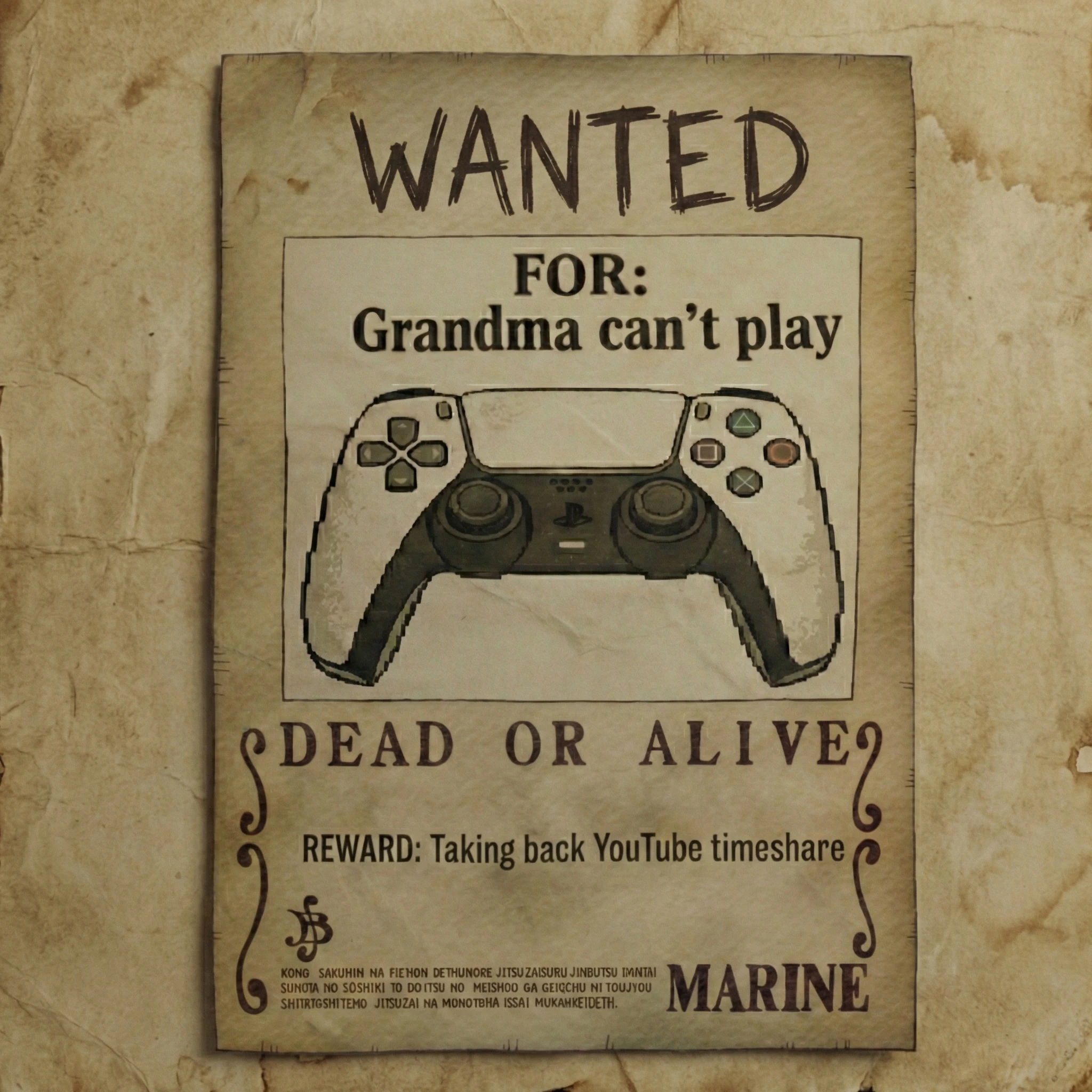
The root of all these problems is the controller. This is where Nintendo made some progress with the Wii and, to a lesser extent, with the Switch. If we want massive TAM, we need a better and more intuitive interface mechanic. The Apple TV controller wasn't it. Obviously. And the TV remote playing C-grade flash games probably isn't, either.
I have fading hope for Netflix here with some of their recent party game announcements. It's a start, but there's also an element in which the defining feature of games, bi-directional entertainment, may be harming us simply by increasing the cognitive complexity relative to omnidirectional content and linear media. There's an answer that's been growing inside Steam fairly rapidly, which is the simulation genre, and to a lesser extent, the expansion of Cozy Games we're about to see in 2026.
These are potential mainstream hits that have so far been constrained to crusty German Steam players and still need to find a way to drive ease of access on TVs. The growth of smart TVs has been a godsend that gaming hasn't taken advantage of, with game makers till stuck in the paradigm of trying to slap the old media onto the new.
While there's an array of startups taking a shot at this, the attempts feel half-hearted and small, not the big, bold bets we need to mount a true counter thesis to YouTube's growing share.
The ultimate reality is that the growth of smart TVs has been a godsend that gaming hasn't taken advantage of.
Related: Gaming’s Best Days Are Behind It