Minimum Falsifiable Product for Experiments or You're Stupid.
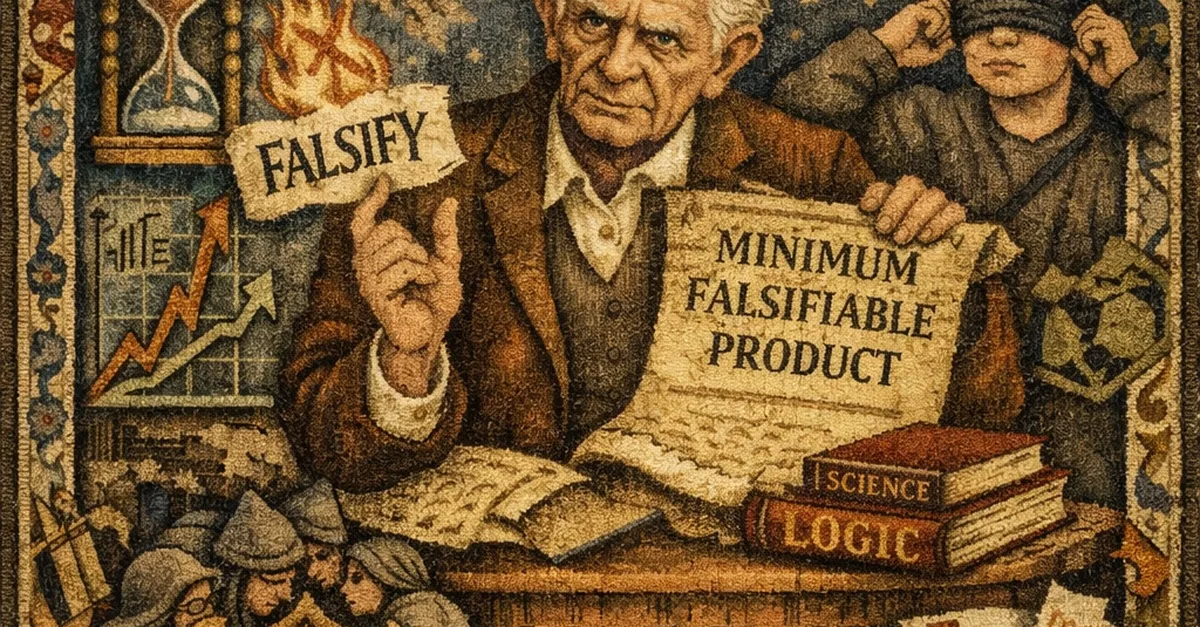
There's a peculiar strain of PM theater that rebrands ideas to make them avant nouveau. MVP became minimum lovable product. I'm sure someone is workshopping "minimum legendary product" as I type. Allow me to contribute my own economist-flavor: the Minimum Falsifiable Product (MFP).
So many of the teams I work with failed to accept or act on the experiment's conclusions. I've watched this play out repeatedly: a team runs a test, but the results don't "work" right. There's a parade of caveats in analyzing the result; a lot of "ifs" and "what's." And the proponents never accept the experiment's clear actionability result. It gets bookmarked as something interesting, and then the team moves on.
This is a failed experiment: no one learned anything, as everyone hunkered down in their turtle shells, too scared to act. It's a colossal waste of everyone's time, and if you're not willing to accept the results of the experiment, don't run it. The way to prep for this beforehand is to only run minimum falsifiable experiments.
What is the minimum set of process design timings, whatever it may be, that falsifies the idea under experiment? Whoever is the proponent of the experiment needs to define this, which backs them into a corner of accepting the results and acting on them once they come through.
Who cares about viable or lovable if the internal stakeholders won't actually action on the damn thing? If you are unwilling to define the conditions under which your idea fails, you are not running an experiment; you are buying optionality for your ego.