Maybe Casual Revenue Is About Cognitive Resources After All
The more I play casual merge games, the more obvious it becomes that passive experiences are ultimately the ones retained over time just by virtue of their weak will. It's certainly true that players need to take action in games like Match or Merge, or even somewhat in the biggest design revelation of the last ten years: Monopoly Go's casualization of social casino. With fail states and high merge levels (frustration?), these games still evoke drama, but even that's mostly faked (see: Volcano Race faked player data).
These games don't have a cognitively intensive core loop like Clash Royale or even a 4x game. Instead, action "unfolds" with largely illusionist player agency. This grants long lifecycles, and steady engagement - a good deal of research indicated that match player maintain for fixed gaming budgets more than their midcore counterparts. Simply reduce friction to prevent any risk of losing an LTV stream. These days, the first 100 match3 levels will barely hit 1.1 APS (attempts per success), with bailout difficulty easing on successive level attempts.
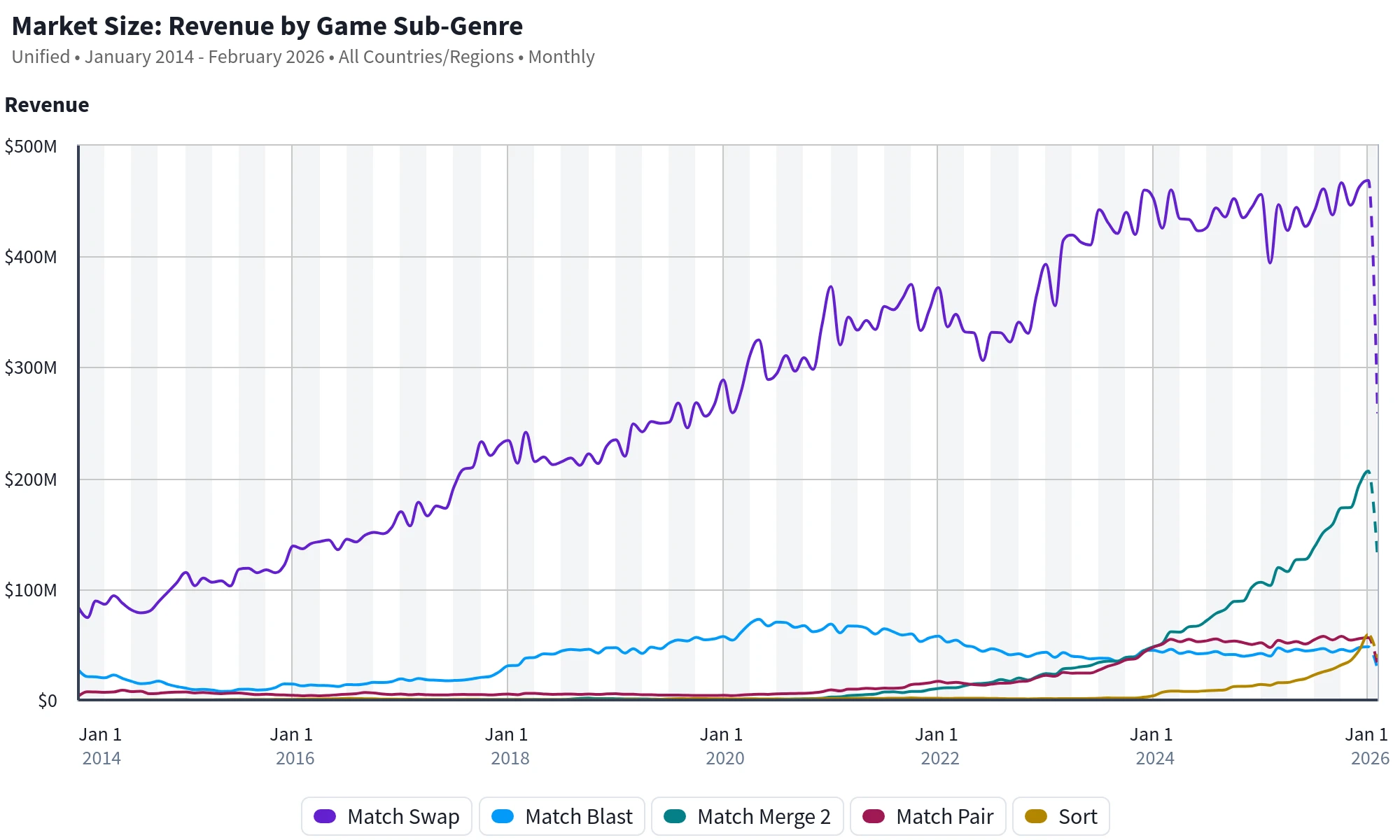
I pin similar cognitive resource requirements to the struggle to have the "other" puzzle category emerge. Tile/Match 3D looks like they'll be one or two category winners, but on a casual GDP scale, it looks irrelevant compared to Merger's real potential to overtake match revenue and become a plurality by the end of 26'.
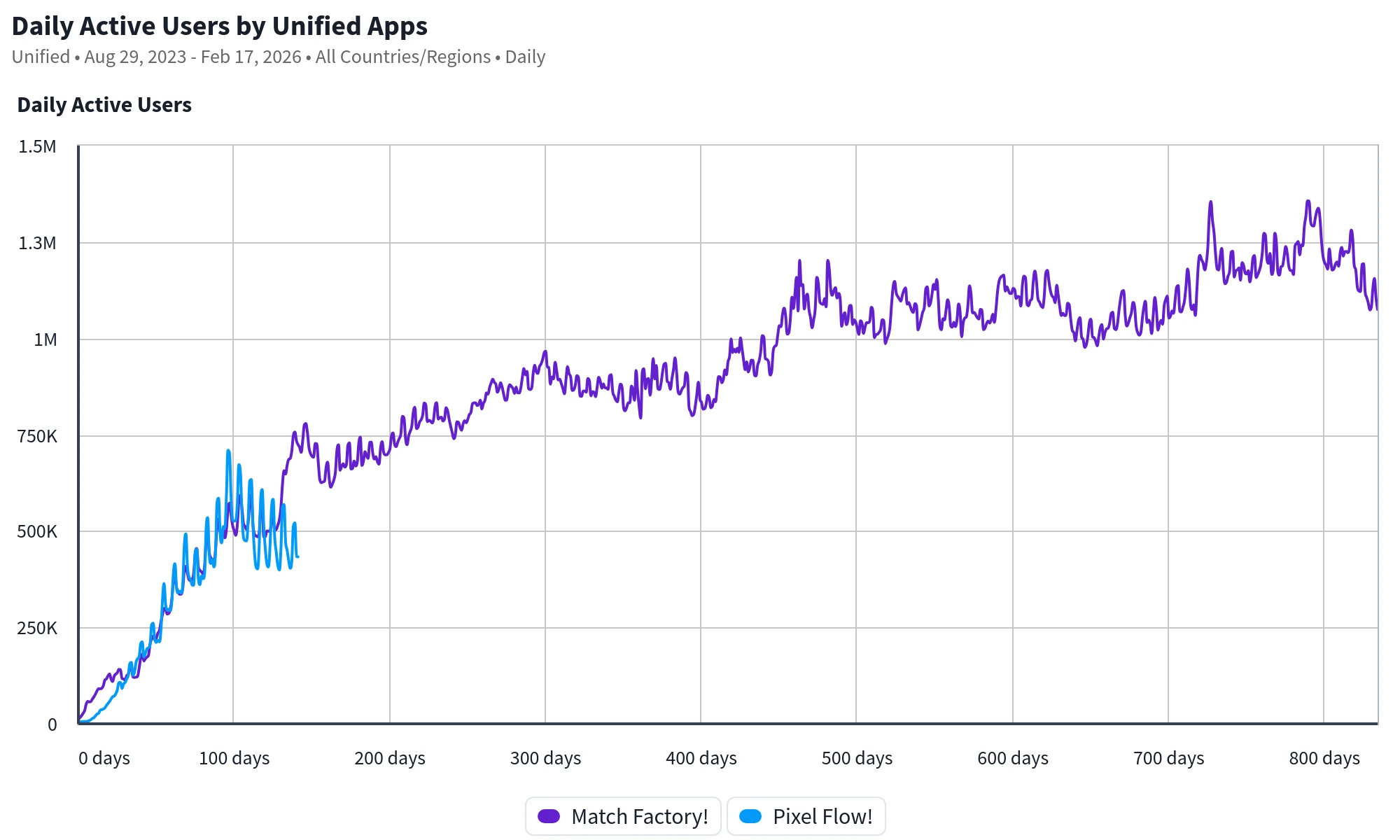
It's also something that appears to be affecting Pixel Flow, which glows up Scopely BD's performance-based aptitude.