How to Monetize HD the Call of Duty Way
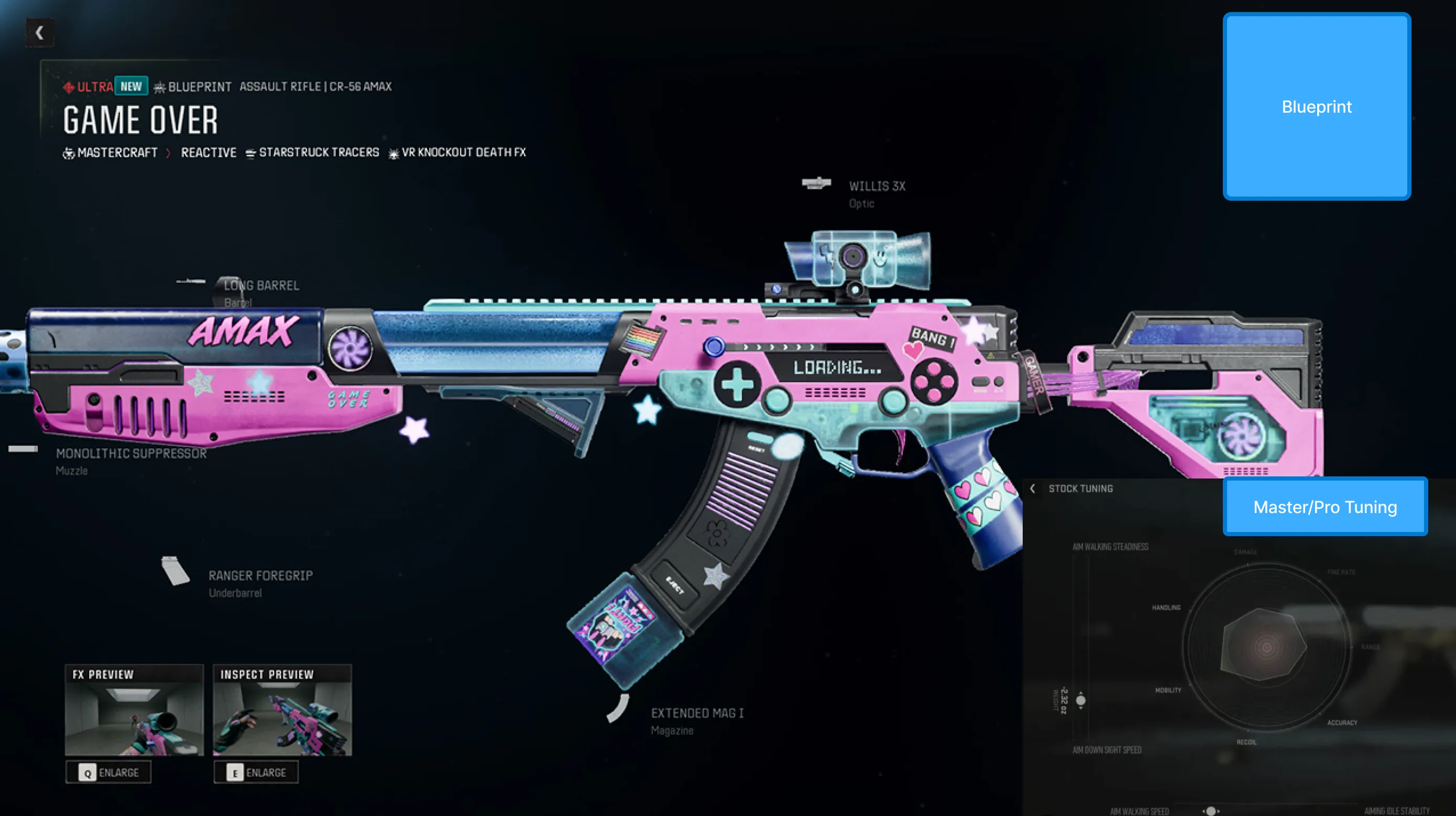
Western PC/console (HD) developers have been circling the same problem for more than a decade: how to monetize power without Reddit tantrums imploding into infinity (Eric Kress talks fondly about this). Some franchises are grandfathered in, or have grown seeds of no expectations into full-fledged monetization products like FC Ultimate Team and GTA Shark Cards. Meanwhile, Eastern developers face no such expectation, and games like Genshin monetize pay-for-power on HD. Yet, for reasons beyond me, one system gets little study: Call of Duty's blueprint system.
Now in Battlefield 6, the blueprint system "pre-progresses" weapons so players can use certain attachments, while it also bundles a cosmetic. Together, they represent a complete fantasy. Players normally earn these attachments, specific to a particular gun, by simply engaging the gun, but by purchasing a blueprint, they are earned ahead of time. Players are still awarded attachments as they level up, but this differs from a boost system, which applies a subsidy on time. Here, players can directly pay to skip, with no additional labor required.
This falls under the category of horizontal progression, but in a rarely scalable way. They come with trade-offs, not straight stat inflation, even if the aggregate effect of more options is usually more power. And unlike other Western horizontal monetization schemas, such as selling characters, blueprints are far more sustainable, as attachments generally have a low marginal cost to create and are designed for core progression reasons anyway. In many ways, Activision has figured out how to bundle existing content to monetization systems. That is the rare case where monetization scales without distorting the design pipeline. It's brilliant.
This has expanded to another of Call of Duty's understudied systems: its pro-tuning system. While this did not survive to the latter parts of the franchise, adding endgame progression systems to first-person shooters has remained an unsolved problem, and this was a gallant attempt. In this system, players could essentially tune individual stats in a spider-chart-like way, which also opened up the option to use preconfigured pro-tune blueprints themselves, creating infinite combinations. I do hope this comes back in some form or another.
In many ways, what the blueprint system ended up solving was simple choice complexity. Since Call of Duty 4: Modern Warfare, Call of Duty has steadily drifted toward RPG territory and is now firmly planted in it. With an individual loadout consisting of 40 to 50 choices across both gameplay and non-gameplay vectors, it foreshadows some of the RPG-like elements we've seen in Destiny and Extraction Shooters. Blueprints act as a cognitive shortcut. They reduce choice paralysis, offer a baseline of combat viability, and present a coherent theme players can attach onto (pun intended).