HD Games: Yes, You Can Experiment With Price
One of the strangest taboos in HD development is price. Price is not brand! Price is a lever, and in a premium model, it is the lever to affect revenue. There's been a wave of indie hits, particularly in the co-op space, ranging from Lethal Company to REPO to Chained Together, that leave millions on the table. One thing they all share is a sub-$10-a-piece price. On any price elasticity assumption, it's hard to imagine that's a revenue-maximizing price. This is a testable assumption, too, and even though HD games refuse to run experiments, it's a completely feasible lever to test using Steam's regional pricing policy. THIS IS HAPPENING BY DEFAULT ANYWAYS, YOU'RE JUST NOT LEARNING ANYTHING.
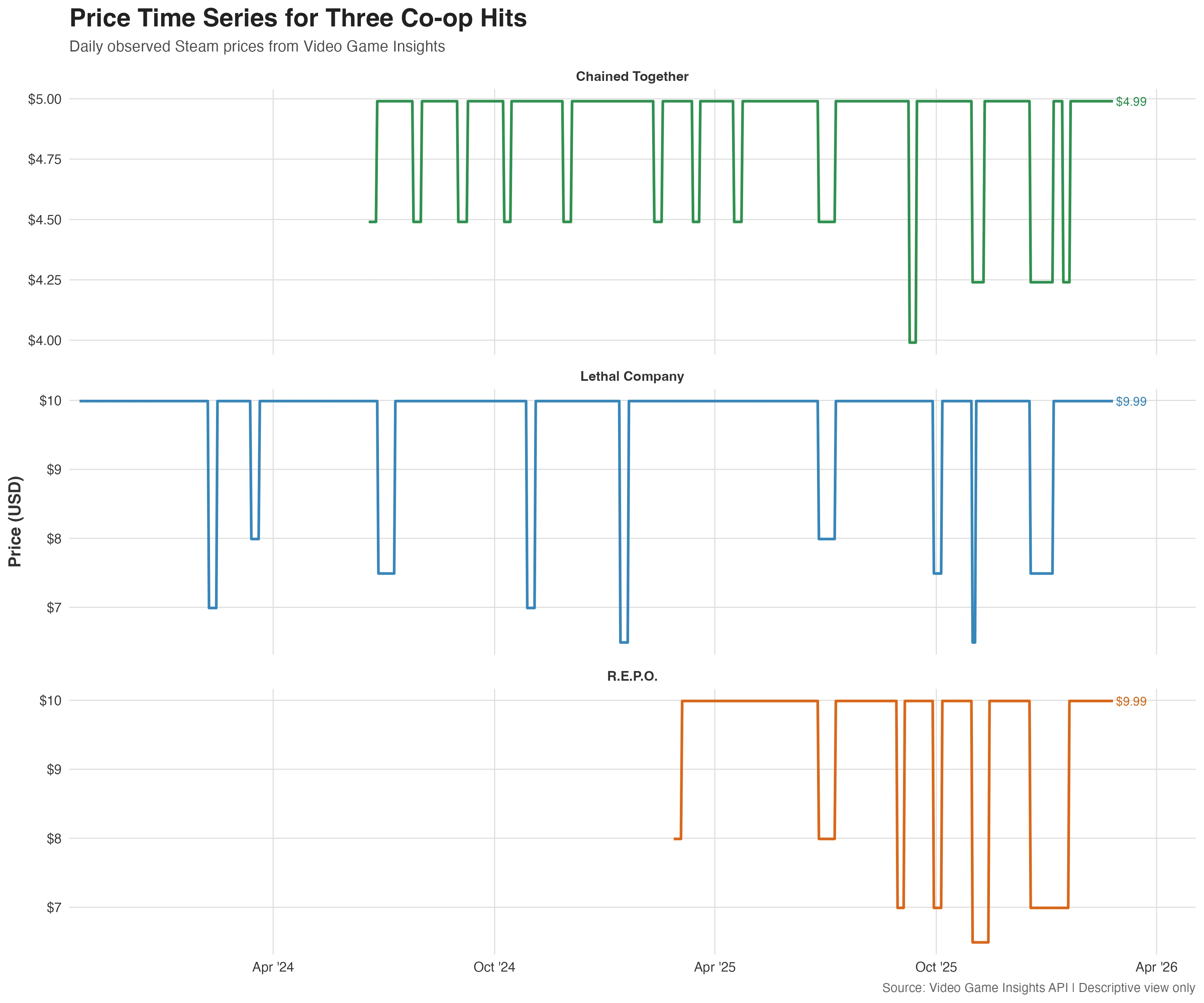
The key is to use a quasi-experimental method called diff-and-diff, in which a particular country is chosen as the region in which to vary the price. In contrast, another country serves as the control group. The interaction term gives you the causal estimate of the price move, subject to one critical assumption: parallel trends.
Parallel trends mean that, absent the price change, the treated and control regions would have moved together. You check this by plotting the pre-period. If, for example, Germany and France track each other for six weeks, and then diverge precisely when you move price in Germany, you have something close to identification. If they were already drifting apart, you do not.
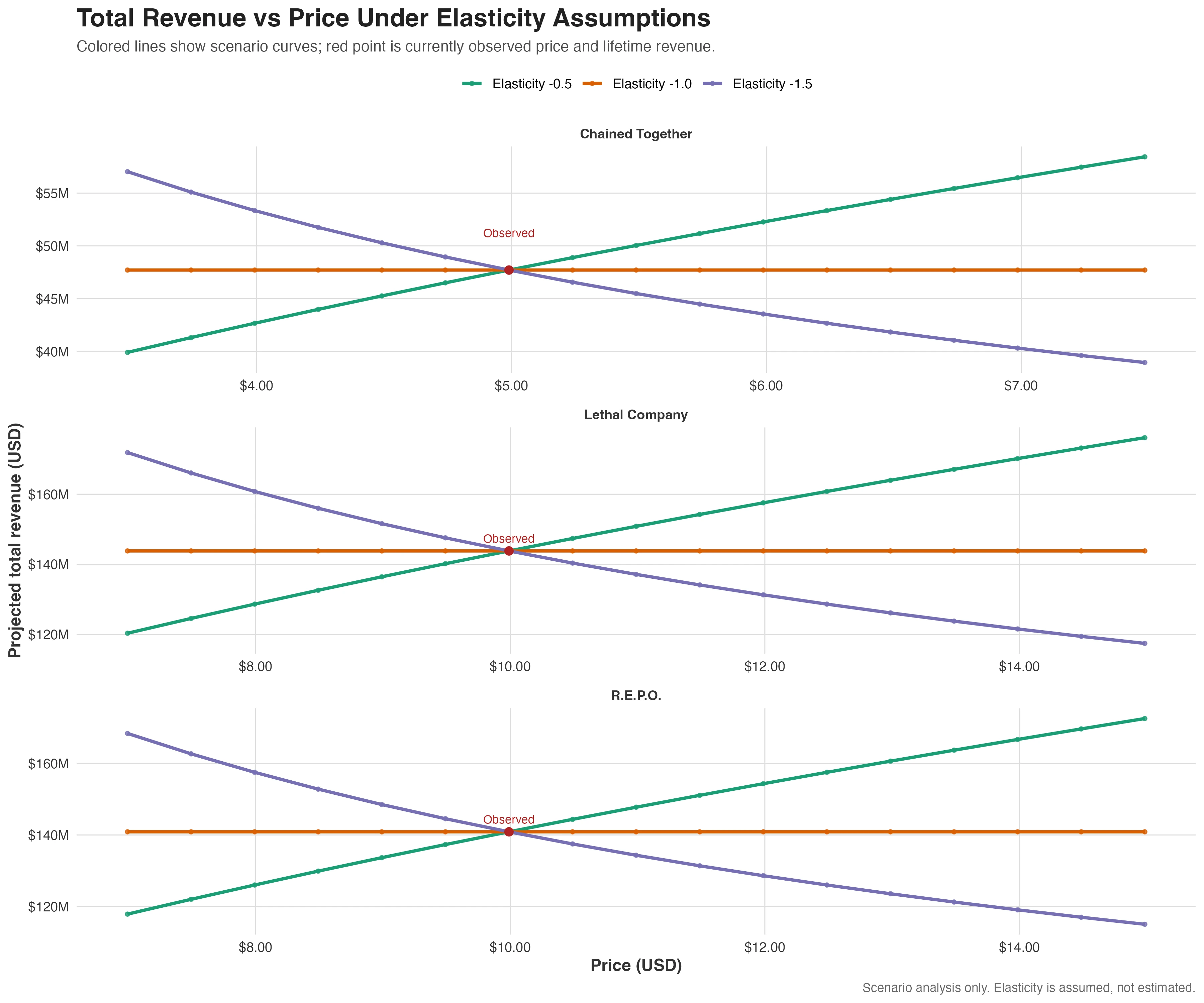
The opportunity is not limited to base price! Deluxe editions are often priced on vibes, too. Is the correct spread $5 or $15? Does a $10 gap anchor players up, or does it cannibalize the base SKU? Gee, if only we could experiment with finding the answer rather than a 2-hour philosophy session every quarter.
I understand the argument from brand marketers that k-factor growth stems from lower prices, and that's valid, but it doesn't undermine the ability to experiment with price increases. Rather than undercut the argument for experimentation, it's actually an argument for it. And maybe you priced it too high! Maybe these games would have been more profitable with lower prices, too. I don't think that's the case, but that's the whole point of experimentation and science. Plus, even if you do not touch launch price, post-launch optimization remains largely unexplored territory.