HBO Lost the Game of Thrones Games
As House of the Dragon storms back and reminds us of this IP's former glory, let's reflect on how poorly HBO has monetized the franchise. As early as season 4, Game of Thrones was hitting ~20m viewers, and yet no spin-offs or marquee transmedia extensions until this year (!). Its gaming strategy has been settled with WB Games, who finally tried to do the right thing and build a 4x game (duh, perfect IP <> Genre Fit) when instead it should have been sold to Scopely to extend the Star Trek Fleet Command engine, which is now withering and dying, barely registering on the company's P&L despite impressive tech and live-ops.
It's not like there haven't been attempts, with 16 different games between PC and mobile. Some are extremely niche, and others are broader. Naturally, the 4x games appear to be the revenue winner, nearly reaching a billion in lifetime revenue.
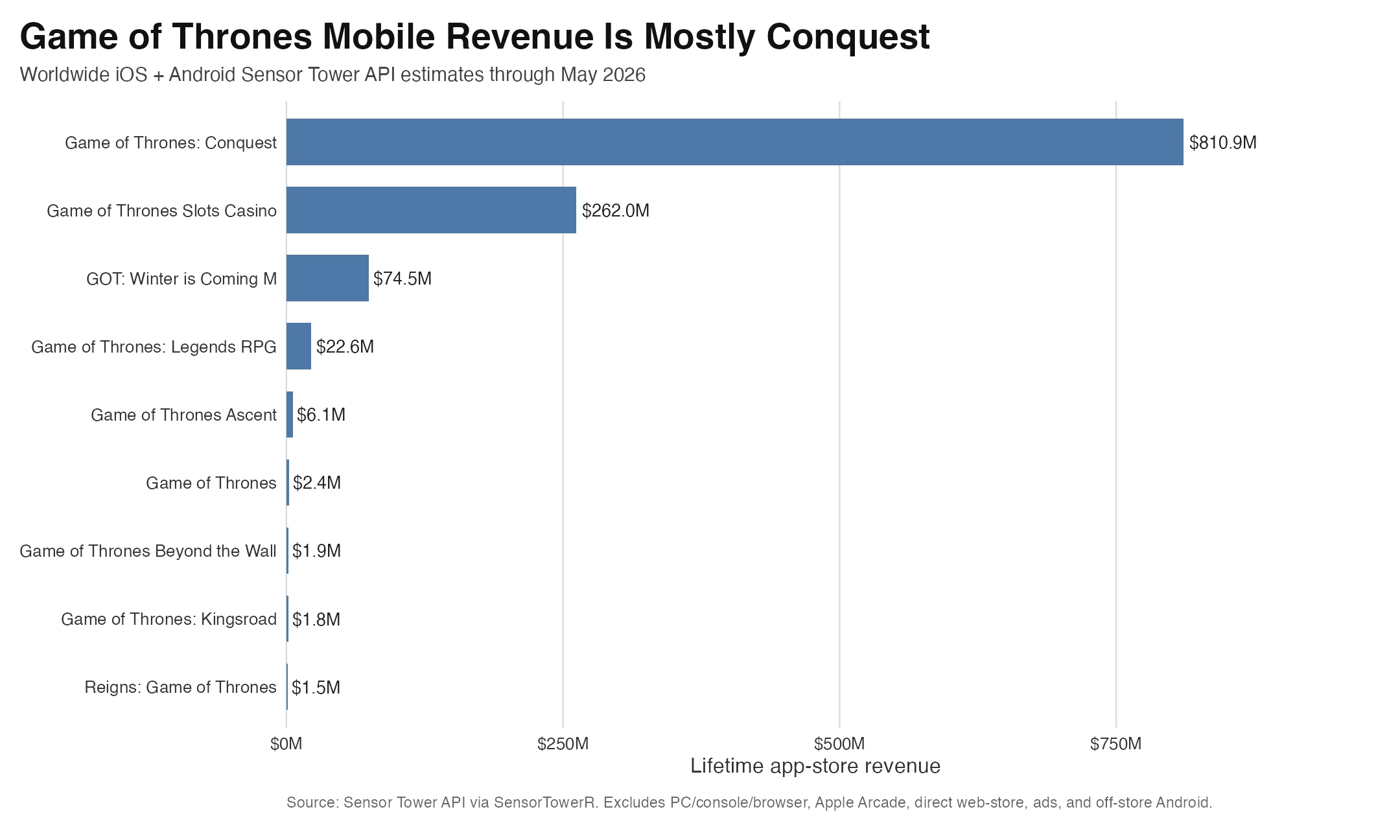
Let's also give credit where credit is due: an aggressive slots licensing policy so that you can gamble with the cast of Westeros in both social and real casinos near you.
In the vein of Gretzky, IP holders need to skate to where the genre puck is going and establish IP <> Genre fit. This fusion of IP and modern mobile mechanics forms one of mobile's rare moats. Moon Active's attempt at a "board adventure" fails to account for MoPoGo's immersive historical positioning here.
On top of this, mobile gaming has completely failed to establish a brand. Supercell's Rob Lowe once lamented that the Screaming Barbarian was one of the few recognizable brands in mobile. It's easy to tell because they haven't changed their app icon, like Candy Crush or Gardenscapes.
This is certainly easier said than done, but on the margin, it is the closest thing to free money. Hasbro reports $150m+ in license revenue annually, excluding any brand halo and those crazy MoPoGo board game sales. Better yet, Scopely is working very hard, day after day, to maintain and grow that share. License holders hang out at the beach and think up casting options for the upcoming MoPo movie.
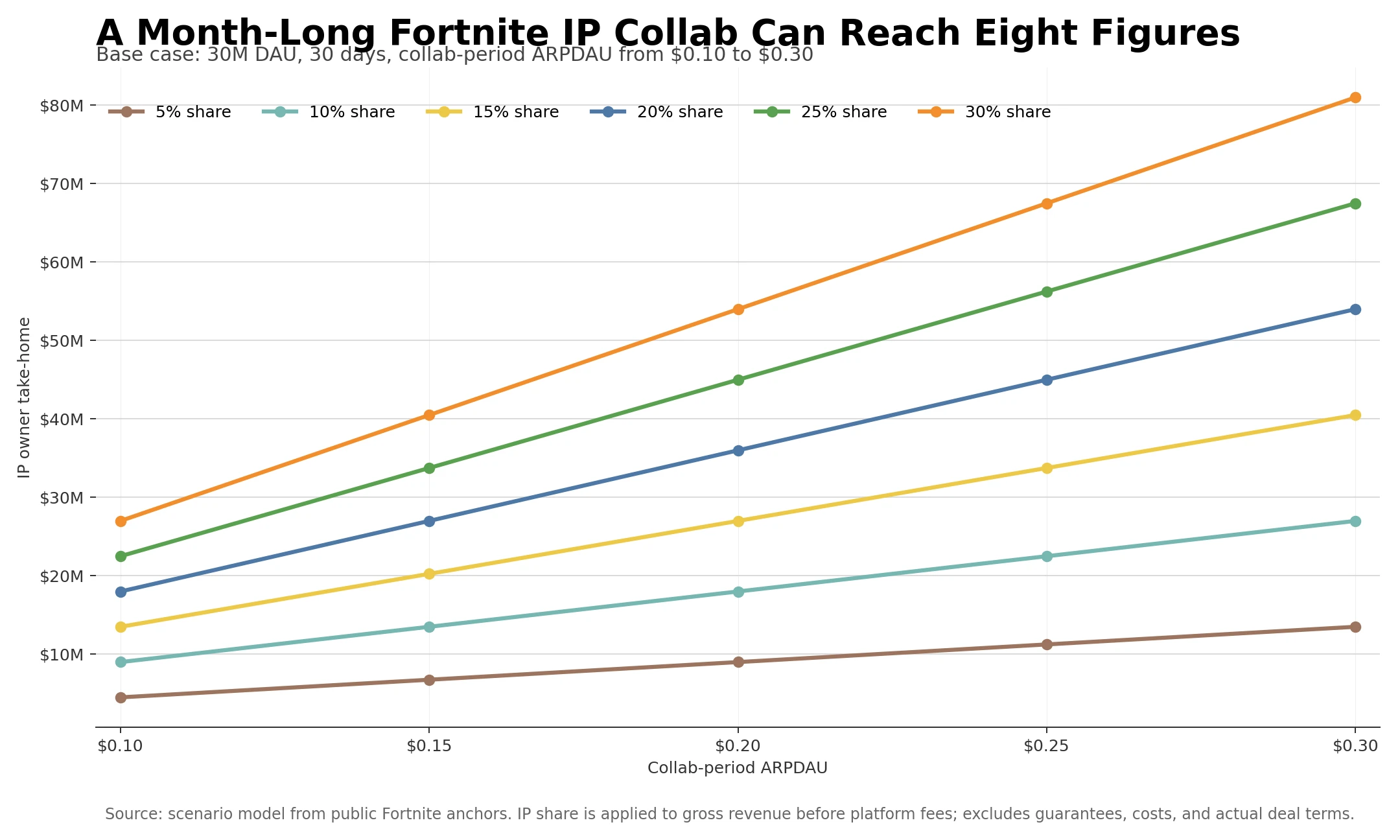
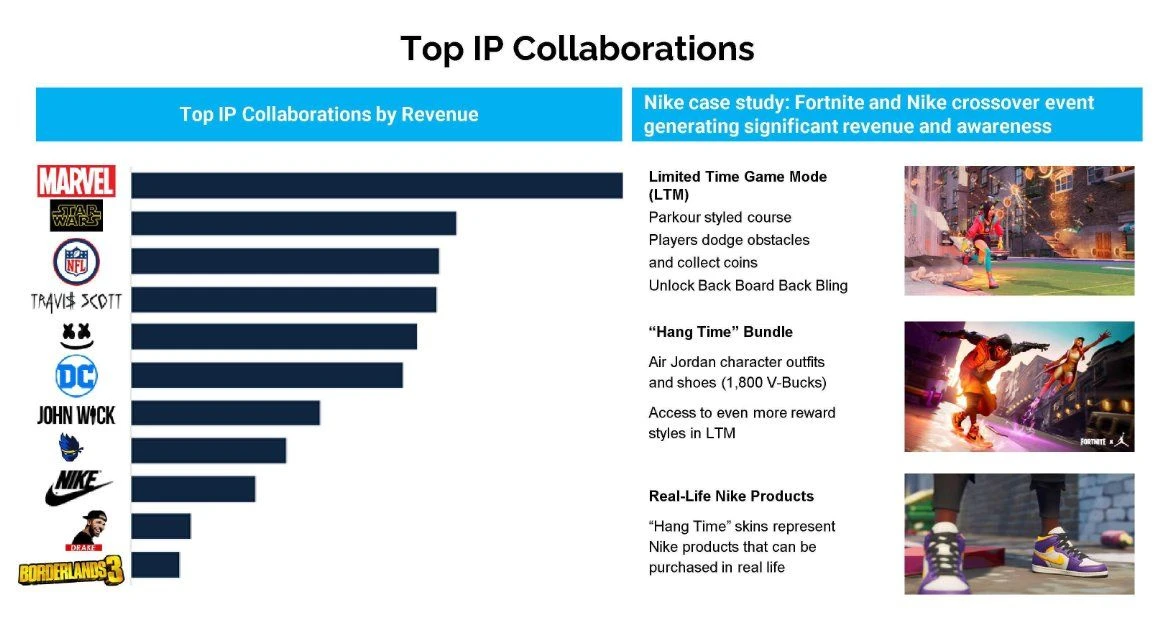
It's hard to orchestrate an HD strategy when the IP game movie tie-in has been obliterated for over a decade. Instead, we see these singular action-adventure games like James Bond or Spider-Man, which exist in their own realities. That could be the answer, like 4x: license to those with proven engines, which already fits neatly into how developers think anyway. Beyond that, IP collabs in top games subsidize attempts like A Knight of the Seven Kingdoms, rumored to cost $36m per season. One simple model is a gross ARPDAU model to estimate sales and apply a take rate. At a large scale, a single collab could easily score $10m+ in pure margin.
Franchise planning needs to capture excess demand. When the mainline TV and book franchise is supply-constrained, licensing is how the owner monetizes demand between releases, rather than letting it go to waste. It is use-it-or-lose-it, and HBO has lost a lot of it.